History of Black LGBTQ Justice
If a human life is described with enough particularity, the universal will begin to speak through it… the yearning for human emancipation that stirs within us all (Yoshino, 2006)
Historical Timeline
1763–1791
British Colonial and Pre-Abolition Era
1945–1982
Post-War, Post-Abolition, and Pre-Charter Era
2003
Buller Men and Batty Bwoys: Hidden Men in Toronto and Halifax Black Communities
2009
Black Gangs, Stigma, Hidden Sexualities, and Criminal Justice Responses
2011
Gays in the Gang: Uncovering LGBTQ+ Identities Within Gang Culture
2013
Scarborough Youth Gang Needs Assessment and Trans Justice
2023–2024
SSHRC National Research Study: 200+ Participants
Today
Black LGBTQ Justice Canada
The Archaeology of Black LGBTQ Presence in Canada
To undertake a full archaeology of Black LGBTQ and gender expansive Canadians’ experiences in Canadian LGBTQ history, activism and contributions is beyond the scope of this website. So we gesture here toward some key moments and timelines of the factors that likely account for the wave of our existence and political organizing that emerges from current concerns pertaining to Black LGBTQ presence in Canada.
1763–1791: British Colonial and Pre-Abolition Era: Early Criminalization of Black LGBTQ Lives through Racial Hierarchies, Anti-Blackness, the Sexualization of Racism, and Sodomy Laws
Despite the importance of late nineteenth-century sexual, medical, and legal discourses, racial slavery provided the background and testing ground for the emergence and articulation of such racist conceptualizations. Canadian scholars have not paid attention to same-sex sexual exploitation and abuse suffered by enslaved people. We know same-sex practices have always been with us, but because of the heteronormative, colonial, racial capitalist exploitation on which slavery was built, same-sex practices arguably run counterproductive to reproductive enslaved exploitation.
Prince 1777: The Halifax case of Prince, a Black man charged with sodomy involving John Smith, a white soldier, raises important questions about anti-Blackness, racial hierarchies, and the criminalization of Black LGBTQ lives. At the end of the trial Prince was found guilty and ordered to be “carried through the streets of the town & receive 39 lashes in different places & be imprisoned 1 month.” Smith the co-accused white solider was found not guilty.
1945–1982: Post-War, Post-Abolition, and Pre-Charter Era: Anti-Blackness, State Surveillance, Sodomy Laws, and the Continued Criminalization of Black LGBTQ Lives
In another example, in 1955, a Black woman by the name of Williemae Moore was initially convicted in Yellowknife, Northwest Territories, of indecent assault. Moore’s case appears to be the first trial of a Black lesbian. She was charged with indecently assaulting another woman in Yellowknife, which was a sexually charged environment at that time.
Timeline and Foundational Research of Black LGBTQ Justice Canada, 2003–2022
Over more than two decades, a substantial body of scholarship, community-based research, public education, and advocacy has emerged to document the realities of Black LGBTQ+ individuals living at the intersections of anti-Black racism, homophobia, transphobia, gang involvement, criminalization, and justice-system engagement. Grounded in a multiplicative framework of inequality, this work demonstrates how intersecting systems of oppression compound exclusion, violence, and marginalization while simultaneously revealing the resilience, leadership, and survival strategies of Black LGBTQ+ communities.
The experiences of Black LGBTQ+ gang-affiliated individuals and justice-impacted populations have been explored through SSHRC-funded research, community consultations, correctional facility engagements, public scholarship, and collaborative projects with scholars and practitioners in Canada and the United States. This foundational body of work laid the groundwork for Black LGBTQ Justice Canada’s commitment to community leadership, policy reform, human rights advocacy, and transformative approaches to equity and inclusion.
2003 – Buller Men and Batty Bwoys: Hidden Men in Toronto and Halifax Black Communities
The publication of Buller Men and Batty Bwoys: Hidden Men in Toronto and Halifax Black Communities represented one of the earliest Canadian studies to openly examine the experiences of Black gay and bisexual men within Black communities. The work challenged dominant silences surrounding sexuality, masculinity, race, and belonging, while documenting the complexities of negotiating Black identity alongside sexual minority status (Crichlow, 2003).
The publication generated significant public controversy and resistance. Advocacy efforts were met with verbal harassment, threats of exclusion, and organized attempts to discredit both the research and its author. These responses revealed the extent to which discussions of sexuality remained contested within some Black community spaces and underscored the urgent need for continued dialogue regarding Black LGBTQ+ inclusion and justice.
The themes explored in this work align closely with James Baldwin’s observation that marginalized people are often compelled to define themselves against dominant narratives that deny their humanity. As Baldwin argued, survival requires the capacity to “re-create yourself” and insist upon recognition beyond socially imposed representations (Stanley & Pratt, 1996, pp. 5–6). This framework became foundational to subsequent scholarship examining Black LGBTQ+ identity, resistance, and self-determination.
2009 Toronto – Black Gangs, Stigma, Hidden Sexualities, and Criminal Justice Responses
This event reinforces earlier arguments concerning the multiple and intersecting forms of Black compulsory cisheteronormativity, and heterogenderism, discrimination experienced by Black LGBTQ justice impacted individuals. Black LGBTQ+ persons may simultaneously encounter racism within mainstream LGBTQ+ communities, homophobia and transphobia within Black communities, and discrimination within correctional institutions and justice systems (Crichlow, 2003). These findings later informed work undertaken as Scholar-in-Residence with Egale Canada, focusing on the intersections of anti-Black racism (ABR), LGBTQ+ identities, criminalization, and community safety.
2011 – Gays in the Gang: Uncovering LGBTQ+ Identities Within Gang Culture
A significant contribution to this emerging area of research came through participation in and engagement with Mark Totten’s pioneering study, Gays in the Gang (Totten, 2011). Conducted in Ottawa, the study explored the lives of 25 active gang members involved in serious criminal activity, including homicide, aggravated assault, armed robbery, hostage-taking, sexual assault, and organized violence.
The participant group consisted of sixteen males, eight females, and one transgender participant. Among the male participants, fifteen identified as gay and one identified as bisexual; all female participants identified as bisexual. Participants represented diverse racial and cultural backgrounds, including Indigenous, Black, and white youth. Despite these differences, virtually all participants shared experiences of severe socioeconomic marginalization, family disruption, interpersonal violence, emotional abuse, and social exclusion.
Many described histories of physical abuse by caregivers and witnessing domestic violence during childhood. Female participants reported high rates of sexual abuse and involvement in survival economies, including sex work and drug trafficking. The study challenged prevailing assumptions that gang involvement and LGBTQ+ identity are mutually exclusive phenomena and demonstrated the necessity of developing gang-intervention strategies that recognize sexual and gender diversity among gang-involved youth.
2013 – Scarborough Youth Gang Needs Assessment and Trans Justice
Building upon these earlier findings, I was commissioned to conduct the Scarborough Youth Gang Needs Assessment Report (2013), which examined the characteristics and service needs of youth involved in court-mandated gang-exit programming in Toronto.
One particularly significant finding revealed that approximately 60% of female participants entering the program self-identified as lesbian or bisexual (Scarborough Youth Gang Needs Assessment Report, 2013, p. 14). This finding challenged dominant assumptions regarding gang-involved women and highlighted the importance of integrating sexual- and gender-diversity frameworks into gang prevention and intervention strategies.
During the same period, findings from the Trans PULSE Project further documented the vulnerabilities experienced by transgender individuals within correctional settings. Scheim et al. (2013) reported that 6% of respondents had experienced incarceration. Among those respondents, approximately two-thirds reported feeling unsafe in prison environments and described experiences including verbal harassment, hostility, anxiety, and depression. Nearly one-third reported experiences of physical violence while incarcerated (Scheim et al., 2013).
Taken together, these findings point to the urgent need for abolitionist approaches the abolition of now, to correctional policies and rehabilitative programs that address the intersecting realities of Black gender identity, sexual orientation, race, and criminal justice involvement.
Legacy and Foundation for Black LGBTQ Justice Canada 2003-2022
Between 2003 and 2022, this body of research established one of the earliest Canadian pieces of evidence bases documenting the lives of Black GBTQ individuals affected by gang involvement, criminalization, incarceration, family rejection, community exclusion, and systemic discrimination. Through scholarship, public engagement, correctional consultations, policy advocacy, and community-based partnerships, this work challenged dominant narratives that rendered Black LGBTQ experiences invisible within both justice and LGBTQ policy frameworks.
Collectively, these studies demonstrated that anti-Black racism, homophobia, transphobia, poverty, family violence, and criminalization cannot be understood in isolation. Rather, these forces operate simultaneously to shape life opportunities, health outcomes, and encounters with institutions.
This foundational research continues to inform Black LGBTQ Justice Canada’s work in advancing equity, restorative justice, policy development, community capacity-building, and transformative inclusion for Black LGBTQ+ communities across Canada.
How Did We Get Here?
Black LGBTQ Justice Canada emerged from the first-ever Canadian and Black Social Sciences and Humanities Research Council (SSHRC) national bilingual study focused on formerly incarcerated Black Gay, Trans, Queer (BGTQ), gender-expansive, and same-sex/gender-loving men. This landmark study, titled Carceral Intersections of Gender Identity, Sexual Orientation and Trans Experience in Confronting Anti-Black Racism and Structural Violence in Prisoner Re-entry, was led by Dr. Wesley Crichlow at Ontario Tech University and conducted between August 2023 and April 2024, during the twin pandemics of COVID-19 and anti-Black racism.
Building on this foundational, SSHRC-funded research, Dr. Crichlow undertook a nine-month inquiry that surveyed more than 200 formerly incarcerated GBTQM and gender-expansive individuals and conducted in-depth interviews with 25 others. This phase examined how compounding and intersecting forces of homophobia, transphobia, stigma, institutional same-gender love humiliation, systemic trauma, and anti-Black racism, shaped the justice-impacted re-entry experiences of Black GBTQM and gender-expansive people. The study captured their navigational experiences and aspirations as they negotiated the criminal justice system from arrest through community transition, reintegration and or re-entry.
200+
Survey Participants
25
In-Depth Interviews
9 Months
Research
Period
SSHRC-
Funded
Research
Based on these findings, Black LGBTQ Justice Canada will prioritize expanding access to legal representation and professional services delivered by practitioners certified through our in-house Expert Black LGBTQ Impact, Race, and Culture-Affirming Assessment (CEBLGBTQIRCA) certification and training for our beneficiaries. This phase will also advance efforts to decolonize sexuality, promote policy and criminal justice reform, and implement innovative educational strategies.
This phase builds on insights from Dr. Crichlow’s SSHRC survey and interviews on BGTBM. These findings revealed pervasive homophobic and transphobic violence, profound pain, traumatic suffering, and significant gaps, a lacunae in tailored justice support systems for Black LGBTQ and gender-expansive populations, who are often compelled to conceal their identities and are frequently cast or perceived as heterosexual, except when conforming to or performing stereotypical tropes imposed upon Black LGBTQ bodies and or identities. These experiences exemplify what Du Bois (1903) theorized as “Black folks double consciousness,” now compounded into a “triple consciousness” for those navigating the intersecting realities of being Black, LGBTQ, and justice-impacted, while expanding upon Ellison’s (1952) metaphor of the Black invisible (man) by situating cisheteronormativity, enforced compulsory heterosexuality, and enforced invisibility as structural conditions shaping these realities.
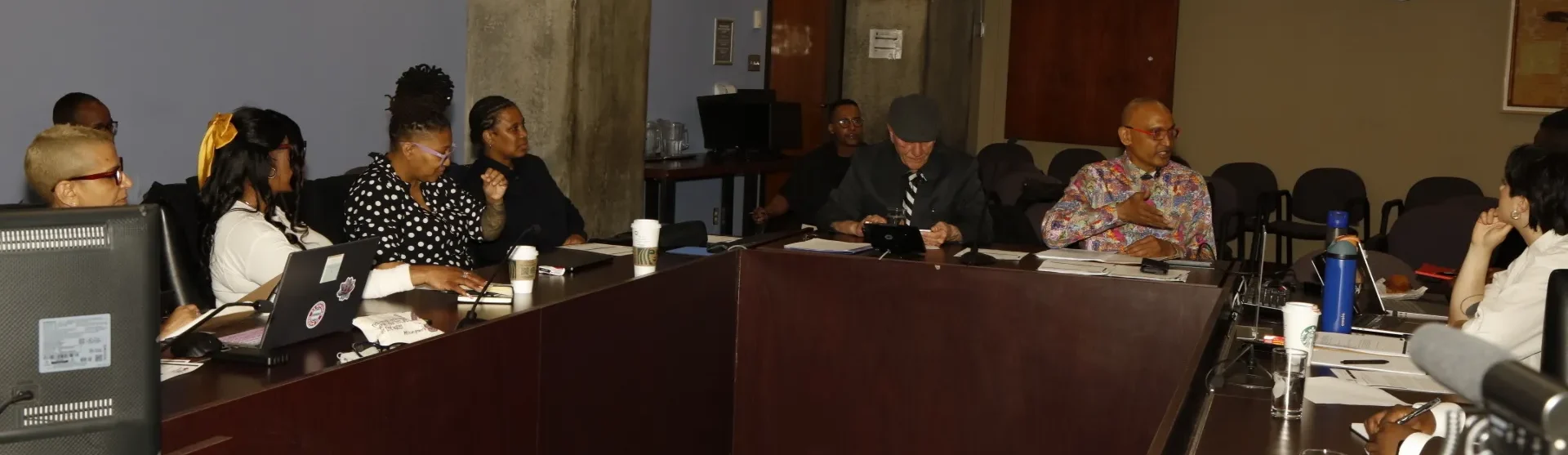
These findings further underscore the urgent need for tailored criminal justice navigation supports, from arrest through community transition, reintegration and or re-entry programs and community resources, to facilitate successful second chance with Black LGBTQ affirming supports. As David Marriott (2023) poignantly observes, “There is no ontology of Black pain: it is either reduced to self-deception or dismissed as non-existent” (p. 936), reminding us of the structural erasure, institutional humiliation, and denial that Black LGBTQ communities continue to endure.
From our surveys and interviews about their immediate needs and hopes for after leaving prison, the gay and trans Black men we spoke to repeat the same wishes, over and over. They seek “a job, job training skills, education, legal rights post-incarceration and to find a home” were top priorities. They also “wish they had support in the court during their trial, wish they knew more about pre-sentence reports for judges to assist them in sentencing, needed to know more about who to obtain support from once released, needed more support accessing medical care, including gender affirming and psychiatric, programming for Black LGBTQ justice impacted individuals, would have liked to meet other Black LGBTQ justice impacted folks for peer support or have a Black LGBTQ criminal justice support group for support, phone cards and phones for reaching family and making appointments, support to attend probation and parole appointments and more”. Unlike most research on white gay criminology which focuses on identity, for Black GBTQM+ it is about survival in which immediate needs, for livelihood/employment and for housing, overwhelm all other considerations as they consider their futures after prison. Clearly, the right to housing and jobs is rooted in the intersections of race and sexual orientation. Taking up these concerns demands that we move beyond the concept of race alone to consider the interactions of race, sexual orientation, gender expression and being justice impacted, on access to housing and jobs.
This survival imperative brings us to a critical intersection, where the right to housing and jobs is rooted in the intersections of race, sexual orientation, and property. Addressing these concerns requires moving beyond the concept of race alone to consider the interactions of race, sexual orientation, gender expression, and justice-impacted status on access to housing and employment. For Black LGBTQ justice-impacted individuals, experiences of anti-Black racism (ABR) are compounded by multiple intersecting and specific forms of violence, homophobia, transphobia, religious phobia, and gender-based discrimination, social, communal and institutional humiliation, alienation, cutting across all borders and communities. These factors are often excluded from everyday general Black social justice work on housing, education, employment, and criminal justice. As Cheryl Harris (1993) argues in Whiteness as Property, whiteness operates as a form of property that confers access, legitimacy, and protection, particularly in relation to housing, employment, and legal recognition. Within this framework, Black LGBTQ justice-impacted individuals are denied access to these “property rights” not only through racial exclusion but also through compounded marginalizations based on gender identity and sexual orientation. The denial of housing and employment is not accidental but structurally embedded in a system where whiteness and compulsory cisheterosexuality is the normative standard for entitlement and belonging (Harris, 1993).
Black LGBTQ Community Priorities
The Black LGBTQ Justice Affirming Assessment (BLGBTQJAA) Certification
Advancing Black Refugee & Immigration Rights
Black LGBTQ Employment, Workplace Equity, and Human Rights
This structural exclusion is compounded by internal community dynamics, where despite laudable Black community activism, Black communities at large have tended generally to be homophobic and transphobic toward Black LGBTQ bodies, especially trans men and trans people. Black LGBTQ Justice Canada loves the Black community deeply, abidingly, and wholeheartedly, and sees itself as integral to Black struggles. More importantly, our work should be contextualized not as a replacement for the focus on Black heterosexual and cisgender women and men’s experiences, but as a logical expansion of existing understandings of injustice and multiple marginalizations experienced by Black LGBTQ and gender expansive justice-impacted individuals.
To move forward, addressing the vital, immediate need for housing, jobs, and employment training is a direct pathway to meeting the needs of justice-impacted Black GBTQM+ individuals. This requires centered supports that challenge anti-Black racism and related discriminations within Black LGBTQI+ communities. If we are to open the political horizons of these men and genderqueer individuals, we must first meet their immediate needs for gainful employment and housing.
"We believe the struggles to end anti-Black racism, gender-based violence, heterosexism, transmisogynoir, and homophobia are not contradictory; rather, they are deeply interconnected."
In response to these urgent needs and systemic gaps, Black LGBTQ Justice Canada was formed as a direct response to these findings, providing education and advocacy to strengthen Black LGBTQ justice-impacted and gender expansive struggles within the justice system. We believe the struggles to end anti-Black racism, gender-based violence in all its forms, heterosexism, transmisogynoir, and homophobia are not contradictory (Crichlow, 2022–2025); rather, they are deeply interconnected and foundational to the work of Black LGBTQ Justice Canada.
Black LGBTQ Justice Canada will work to advance substantive equality through policy advocacy that drives systemic change within the justice system, specifically targeting intersectional invisibility and inequities faced by Black LGBTQ and gender expansive justice-impacted people. We aim to advance substantive equality by documenting the diverse ways Black LGBTQ and gender expansive minority communities experience multiple and compounding marginalizations, including how criminalization and Anti-Black racism intersects with identity formation and how institutional & communal humiliation, homophobia, transphobia, and cisnormativity shape these experiences. We also advocate for resources and support that affirm and sustain these identities. Our work should be understood not as replacing a focus on Black heterosexual and cisgender women’s and men’s experiences, but as expanding extant understandings of injustice and the multiple marginalizations experienced by Black LGBTQ and gender expansive individuals impacted by the justice system. These individuals have too often been erased or rendered invisible within dominant narratives.
Looking Back To Look Forward
It is not a taboo to return and fetch it when you forget” (Temple, 2009, p. 1). This Akan proverb from Ghana, particularly among the Ashanti and related Akan communities, is central to the concept of Sankofa, which underscores the importance of reclaiming what has been lost or erased. Black LGBTQ justice work embodies this principle by rooting itself in a legacy of resistance that challenges systemic anti-Blackness and cisheteronormativity, insisting on the full humanity and visibility of those at the margins of the margins. Sankofa, as Jennifer Slater (2019) notes, symbolizes the reclamation of historical wisdom as a foundation for healing and identity reconstruction. This reclamation is not merely symbolic; it is a radical act of survival and futurity.Black LGBTQ activists and scholars build on the insights of thinkers like Audre Lorde, who declared that “there is no such thing as a single-issue struggle because we do not live single-issue lives” (Lorde, 1984), and James Baldwin, who reminded us that confronting history is essential to transformation. Social justice, in this context, is not only about legal rights or policy change, but also about cultural memory, embodied resistance, and the creation of spaces where Black LGBTQ and gender expansive life can thrive unapologetically. With its nonlinear representation of time and its salience for sociopolitical and sexual liberation frameworks, especially in the African diaspora, Sankofa has been framed as an “Afrocentric methodological practice of historical recovery” (Karenga, 2001, p. 14), which holds an important foundational place among African epistemological concepts and Black LGBTQ & gender expansive people’s humanity.
In a powerful act of unity, social justice calling and shared purpose, moving from a working committee, twelve dedicated board members have come together to formally serve the vision of Black LGBTQ Justice Canada. Their collective agreement to join this transformative journey reflects a deep commitment to justice, healing, and equity for Black LGBTQ and gender expansive communities. As we honour their leadership, we are reminded of the words of Kenji Yoshino: “If a human life is described with enough particularity, the universal will begin to speak through it… the yearning for human emancipation that stirs within us all” (Yoshino, 2006, p. 185). This quote speaks to the heart of our mission and the courage of those who have stepped forward to guide it. Equally resonant are the words of Saidiya Hartman, who writes: “Waywardness is an ongoing exploration of what might be; it is an improvisation with the terms of social existence, when the terms have already been dictated, when there is little room to breathe… It is the untiring practice of trying to live when you were never meant to survive” (Hartman, 2019). Black LGBTQ Justice extends a heartfelt gratitude to each of them for embracing this vision and standing in solidarity with those whose voices have long been silenced. Their compassion and presence affirm that this movement is not only necessary but deeply and humanly supported.
Dr. Wesley Crichlow, PhD
Professor
Founder & Principal Executive Lead
References
Crichlow, W. (2003). Buller men and batty bwoys: Hidden men in Toronto and Halifax Black communities. University of Toronto Press.
Crichlow, W. (Principal Investigator). (2022–2025). Carceral intersections of gender identity, sexual orientation and trans experience in confronting anti-Black racism and structural violence in the prisoner re-entry industrial complex (SSHRC-funded research project).
Crichlow, W. (2026).“We exist”: Supporting diasporic Black LGBTQI+ people in Canada in the Decade for People of African Descent (2015–2024). In M. Edelson (Ed.), Exposing the deep roots and new threats of Canada’s resurgent right (pp. 95-120). Publisher.
Scheim, A. I., Bauer, G. R., Pyne, J., & Travers, R. (2013). Reported experiences of trans people in prison in Ontario. Trans PULSE Project.
Stanley, S., & Pratt, L. (1996). Conversations with James Baldwin. University Press of Mississippi.
Totten, M. (2011). Gays in the gang. Journal of Gang Research.
Steven Maynard, “In Search of ‘Sodom North’: The Writing of Lesbian and Gay History in English Canada, 1970–1990,” Canadian Review of Comparative Literature/ Revue canadienne de littérature comparée 21, no. 1/2 (1994): 117–32.
Regina v. Moore, 1955, as cited in Constance Backhouse, Carnal Crimes: Sexual Assault Law in Canada, 1900–1975 (Osgoode Society, 2008), 193.